I May Need to Start Bringing Tissues to Seller Appointments

I’ve joked recently that I may need to start bringing a box of tissues with me to seller appointments. Unfortunately, I’m not really joking.
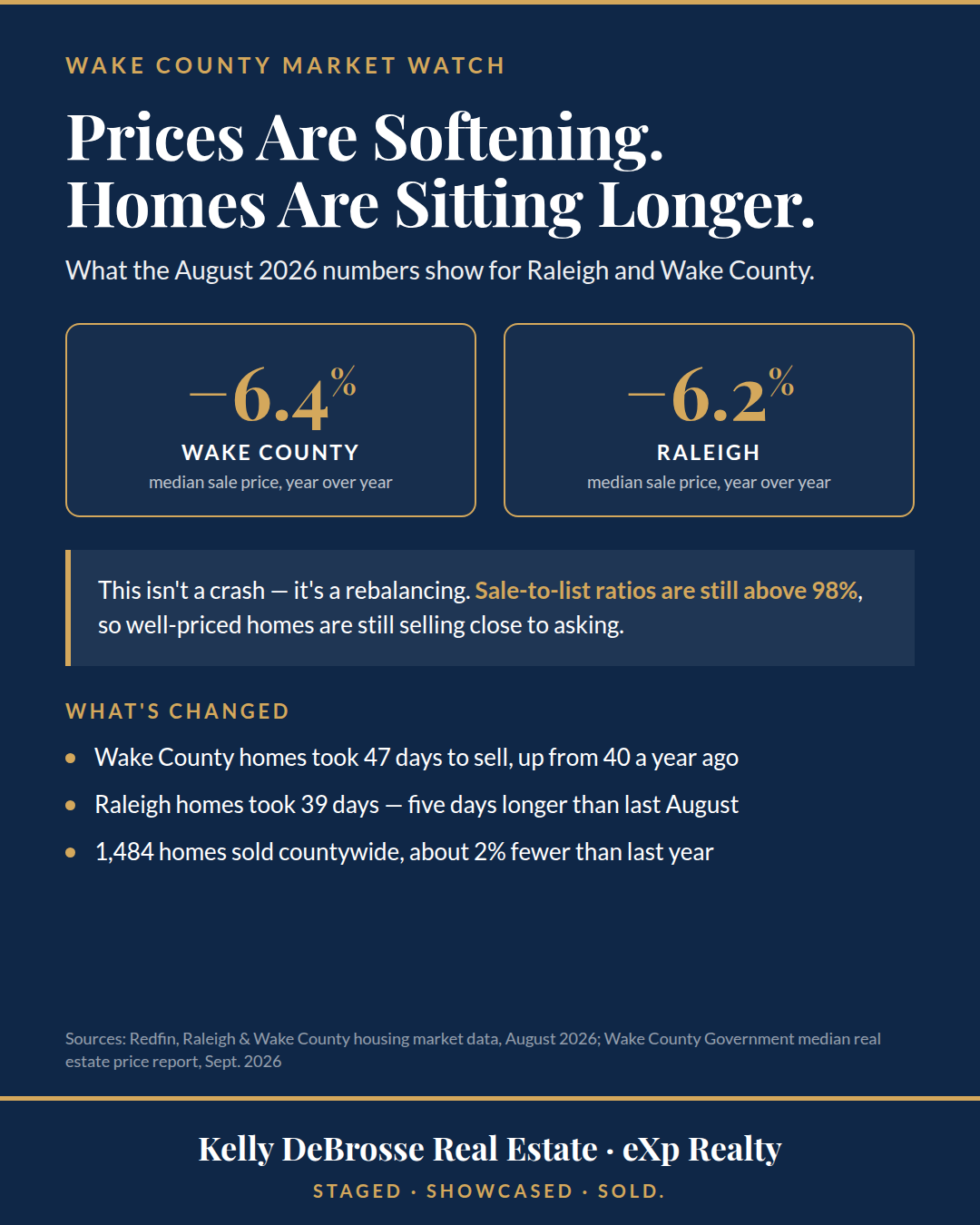
I haven’t felt this way sitting across from sellers since 2008. I’m not saying we’re experiencing another 2008 housing crash because we’re not. I’m talking about what it feels like to sit at someone’s kitchen table and watch them process the difference between what they reasonably believed their home was worth and what the market is telling us today.
I’ve been doing this for more than 23 years, so I’ve had plenty of difficult conversations about value. What’s happening right now feels different because in some cases the values sellers are having trouble letting go of aren’t from five years ago. They aren’t necessarily unrealistic numbers someone pulled off the internet either. Some of them were supported by the market earlier this year.
I have one home that solidly comped somewhere between $500,000 and $515,000. Today we’re at $450,000 and it still isn’t moving. More concerning to me, we aren’t even getting the showing activity I would normally expect at that price.
I have another example in North Raleigh, an area that has historically been a very strong market. I sold this particular home in 2025 for over $725,000. That same home went back on the market with another agent, and I watched it sit for months before the listing expired.
Based on what I’m seeing in today’s market, I believe it will likely end up somewhere around $650,000.
That’s roughly a $75,000 difference on the same house.
And in this case, I don’t have to wonder what it might have been worth last year. I know. I sold it. That same house was exposed to the market for months, and buyers responded very differently than they did then.
When I put numbers like these in front of someone, I have to remember that I’ve had time to process what’s happening. I look at this market every day. I’ve watched showing activity change. I’ve watched buyers become more selective. I’ve watched houses sit that I would have expected to move not very long ago.
The seller sitting across from me may be hearing what all of that means for their house for the first time.
Like any financial or emotional loss, that can take some time to process.
In many cases, it’s really a perceived loss. Nobody took $75,000 out of someone’s bank account. But if you had good reason to believe your house was worth what it sold for last year and now the market is telling us something very different, that money feels real. Maybe you had already mentally allocated it to the next house, retirement, paying something off or whatever you thought came next.
I can’t expect someone to hear that and immediately say, “Okay, that makes sense. What do we do now?”
It becomes considerably more difficult when people have already made financial decisions based on the market we had earlier in 2026.
Some of the hardest situations I’m seeing right now involve homeowners who made decisions in January, February or March based on what their existing home could reasonably be expected to produce. They weren’t necessarily being overly optimistic. The comparable sales were there. The buyer activity was there. They made a decision using the information available to them at the time.
Now they’re trying to finish that plan in a very different market.
New construction has added another layer to this. I’m seeing buyers who committed to new homes without the protection of making that purchase contingent on successfully selling their existing home. I’ve also seen new construction fail to appraise at the contracted price without the builder simply absorbing the difference. I’ve had conversations with multiple closing attorneys who are seeing these issues across transactions coming through their offices as well.
Depending on the builder and the contract, that can leave the consumer carrying the risk on both sides. Their existing home may now be worth substantially less than they expected and take considerably longer to sell, while their obligation on the new home hasn’t changed simply because the resale market did.
Imagine making a decision when the sales supported $500,000 to $515,000 for your current home and then getting close to closing on the new house while struggling to get buyers through the door at $450,000.
That’s not a market statistic anymore. That’s someone’s financial plan.
The lack of showings has probably been one of the most dramatic changes for sellers to understand. In some areas and price ranges, it really does feel like a drought. When buyer activity was strong, you could sometimes put a house on the market knowing there were a few things that weren’t perfect. If one buyer didn’t like something, there was a reasonable chance another buyer was coming through later that day or over the weekend.
I don’t think we have the luxury of thinking that way right now.
A home may get very few showings over an entire month, and one of those people may be the only willing and able buyer we see during that period. We don’t know which showing that’s going to be, so the house needs to be ready for every one of them.
If there’s something about the house we already know is going to create an objection and it makes financial sense to address it, I’d rather deal with it before that buyer walks through the door. We may not get another equally qualified buyer next Saturday.
That doesn’t mean every seller should spend $30,000 preparing a house. Sometimes selling as-is is absolutely the right financial decision. But it needs to be a decision we’ve made after looking at the cost, condition, competition, likely return and the seller’s circumstances. “Let’s put it out there and see what happens” is a much more expensive experiment when buyers are this scarce.
This market also ties directly into why I don’t always get—or even take—every listing I meet with.
Properly preparing and marketing a home costs me thousands of dollars. It also takes a significant amount of my time and the time of the professionals I bring into the process. I don’t mind making that investment. It’s how I believe a home should be brought to market. But I can’t responsibly make that investment unless I believe the seller is properly motivated for the market we’re actually entering.
And by motivated, I don’t simply mean someone wants or needs to sell.
I mean we’ve looked at the information together and they understand what buyers are doing right now. We’ve talked honestly about price, condition and competition. If the house needs work, we’ve figured out what makes financial sense and what doesn’t. They understand that showing activity may be painfully slow and that we may only get a handful of opportunities to impress the right buyer. Most importantly, I need to believe that if the market gives us information neither of us likes, we’re going to be able to respond to it.
That doesn’t mean the seller has to agree with every recommendation I make. They don’t. It’s their house and their money. But we need enough common ground that I can see a realistic path from putting the house on the market to actually getting it sold.
I can’t manufacture the missing buyer, and I can’t make today’s buyer pay yesterday’s price.
Sometimes the person sitting across from me simply isn’t ready to accept that yet, and I understand why. If someone believed they had $50,000 or $75,000 more in their house a relatively short time ago, they may need some time to absorb what has changed before they’re ready to make another decision.
That’s probably the biggest thing I’ve learned from these appointments lately. My job isn’t simply to put the data on the table and expect someone to instantly be okay with it. I need to explain what I’m seeing, answer the questions, look for the reasonable options and give people enough information to make their next decision based on the market we actually have.
Sometimes that means we move forward. Sometimes we change the plan. And sometimes I leave the house without a listing because the seller needs some time to process everything we just talked about.
I’d much rather do that than tell someone what they want to hear, spend thousands of dollars bringing a home to market and have both of us learn the hard way what the information was already trying to tell us.
The market can change remarkably quickly. People’s financial plans and expectations don’t always have the ability to change with it quite as fast.
Right now, I’m seeing what happens when those two things collide.
And yes, I may actually start keeping a box of tissues in my car.

Thinking about your own situation?
Call or text, or send me an email. We can start with a conversation.