Raleigh & Wake County's Housing Market Keeps Cooling — Here's What the August Numbers Show
If you've had a feeling that the Raleigh housing market doesn't feel like it did two or three years ago, the numbers back that up. The latest data for August 2026 shows prices continuing to soften and homes taking longer to sell across Wake County, a trend that's been building through the year and is worth understanding whether you're thinking about buying, selling, or just keeping an eye on the value of the home you already own.
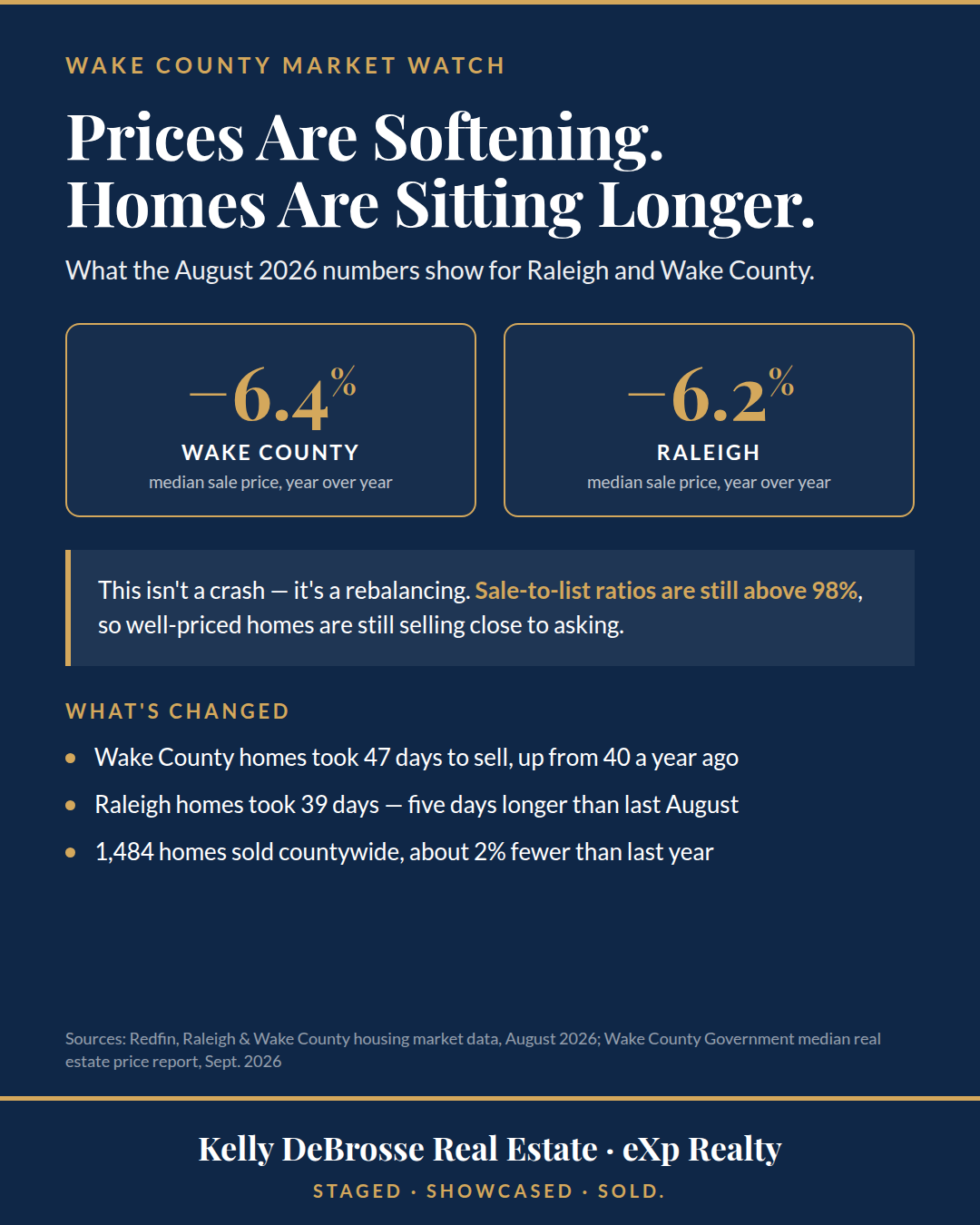
According to Redfin's August 2026 market report, the median sale price in Wake County was $458,466, down 6.4% from a year earlier. In the city of Raleigh specifically, the median sale price came in at $422,221, down 6.2% year-over-year. Homes are also sitting on the market longer: the typical Wake County home took 47 days to sell in August, up from 40 days a year ago, while homes in Raleigh proper took 39 days, five days longer than last August. Sales volume dipped slightly too, with 1,484 homes sold across Wake County in August, about 2% fewer than the same month last year.
Wake County's own government data tells a similar story from a different angle. Using deed recordings rather than MLS sales, the county reported a median real estate price of $440,000 in August, down $18,500 from July's $458,500. Total real estate transactions recorded in August also slipped, with 6,191 deeds filed compared to 6,561 in July, and the number of deeds of trust (a proxy for financed purchases) fell from 3,132 to 2,998 over the same period.
None of this points to a crash or a market in trouble. Sale-to-list price ratios in both Raleigh and Wake County are still holding above 98%, meaning homes that are priced well are still selling close to asking price. What's changed is the pace and the leverage. A year or two ago, well-priced homes in desirable areas were routinely fielding multiple offers within days. Today, buyers have more time to think, more room to negotiate, and more homes to choose from before making a decision.
For buyers, this shift is good news in a few concrete ways. Longer days on market mean less pressure to waive inspections or contingencies just to compete. It also means there's more room to negotiate on price, closing costs, or repairs, especially on homes that have been listed for a few weeks without an offer. That said, 39 to 47 days is still a fairly brisk pace historically, so well-priced, well-maintained homes in popular neighborhoods are still moving quickly. This isn't a market where buyers can assume every seller is desperate.
For sellers, the takeaway is that pricing and presentation matter more now than they did during the frenzy years. Homes that are priced realistically for current conditions, rather than for what a neighbor's house sold for eighteen months ago, are the ones still closing near list price. Overpricing in a market with more inventory and more patient buyers is more likely to result in a stale listing and eventual price cuts than it would have a couple of years ago.
If you're weighing a move in the next few months, it's worth looking at how these countywide trends are playing out in your specific neighborhood, since conditions can vary block by block depending on price point, school zone, and inventory levels nearby.

Thinking about your own situation?
Call or text, or send me an email. We can start with a conversation.